KDP Interiors Kakuro Puzzle: Strategic Asset Allocation for Low-Content Publishing
In the evolving landscape of Amazon KDP, success is increasingly defined by operational efficiency and strategic asset selection rather than sheer volume alone. For publishers targeting the logic puzzle niche, acquiring a pre-formatted KDP Interiors Kakuro Puzzle collection represents a calculated business decision to bypass technical friction and focus on market positioning. This specific interior package, featuring 142 unique puzzles formatted for immediate upload, serves as more than just content; it is a foundational component of a scalable publishing workflow designed for entrepreneurs and creators who value time-to-market alongside product quality.
Kakuro occupies a distinct position in the puzzle hierarchy. Often described as a mathematical transliteration of Sudoku, it appeals to a demographic that seeks cognitive engagement beyond simple pattern matching. By leveraging a ready-to-upload interior with verified specifications, publishers can capitalize on this high-demand, low-competition segment without the significant overhead of manual grid generation or typesetting. The strategic utility of this asset lies in its ability to transform a complex production process into a streamlined operational task, allowing decision-makers to allocate resources toward branding, keyword research, and audience building.
Evaluating Technical Specifications as Business Metrics
When assessing digital assets for KDP, technical adherence is not merely a compliance issue; it is a risk management strategy. A rejected manuscript due to bleed errors or margin violations results in lost momentum and delayed revenue. This specific KDP Interiors Kakuro Puzzle package mitigates these risks through rigorous pre-validation. Understanding the included specifications allows publishers to plan their cover design and metadata strategy with confidence.
- Dimensions and Format: The 8.5 x 11 inch PDF format is the industry standard for adult puzzle books, offering ample space for complex grids and user annotations. This size maximizes perceived value while maintaining cost-effective printing margins.
- Bleed Configuration: Proper bleed settings are critical for professional presentation. This interior includes correct bleed parameters, ensuring that grid lines extend appropriately to the trim line without risking content loss during the binding process.
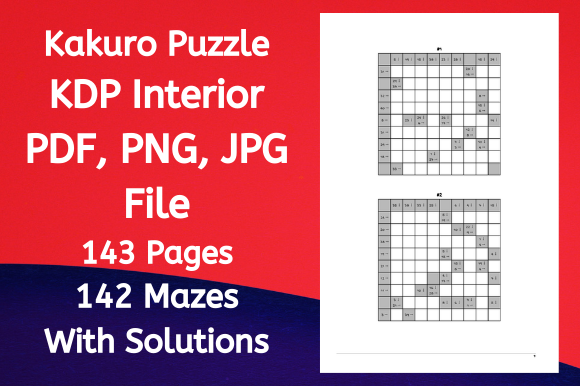
- Density and Pacing: With 2 Kakuro puzzles per page across 143 pages, the book offers substantial content density. This layout balances challenge with usability, preventing the "sparse" feel that often leads to negative reviews in low-content categories.
- Solution Integration: Including 2 answers per page streamlines the user experience. Strategically, this reduces the need for separate solution sections at the back of the book, keeping the user engaged within the primary content flow and reducing total page count costs.
These specifications should be viewed as fixed variables in your business equation. Because the interior is tested and formatted, you eliminate the variable of technical uncertainty. This stability allows for accurate royalty calculations and predictable production timelines, which are essential for professionals managing multiple titles or balancing publishing with other business ventures.
Strategic Positioning in the Logic Puzzle Niche
The decision to publish Kakuro over Sudoku or Word Search should be driven by competitive analysis and audience targeting. Kakuro attracts a specific psychographic profile: individuals who enjoy arithmetic, logic, and structured problem-solving. This audience often overlaps with professionals, educators, and lifelong learners who view puzzles as mental maintenance rather than mere distraction. When utilizing this KDP Interiors Kakuro Puzzle asset, your external positioning must align with these internal expectations.
Marketing this interior requires moving beyond generic "puzzle book" descriptors. Consider positioning the book as a tool for cognitive sharpness, mathematical fluency, or focused relaxation for analytical minds. The fact that the content is newly generated and non-duplicate is a significant selling point. In an era where AI-generated content floods marketplaces, guaranteeing unique, error-free puzzles builds trust and authority. Your listing copy and A+ Content should emphasize the integrity of the puzzles and the thoughtful layout, distinguishing your product from automated, low-quality alternatives.
Furthermore, the 142-puzzle count provides flexibility in pricing strategy. It is substantial enough to command a mid-tier price point while remaining lightweight enough for competitive printing costs. Publishers can use this asset as a flagship title to test the Kakuro niche or as a complementary product to broaden an existing puzzle brand’s portfolio. The key is intentionality; do not simply upload the file. Contextualize it within a broader brand narrative that speaks to the specific needs of the logic puzzle enthusiast.
Operational Efficiency and Workflow Integration
For freelancers, small business owners, and marketers, time is the most constrained resource. Creating a 143-page puzzle book from scratch involves hundreds of hours of design, testing, and formatting. Utilizing a pre-made interior shifts the workload from creation to curation and distribution. However, efficiency does not imply passivity. To maximize the ROI of this KDP Interiors Kakuro Puzzle interior, integrate it into a deliberate publishing workflow.
- Cover Design Alignment: Since the interior dimensions and bleed are fixed, commission or create cover art that specifically complements the 8.5 x 11 layout. Ensure the spine width calculation matches the exact page count (143 pages) to avoid alignment issues.
- Keyword Strategy Development: Use the time saved on formatting to conduct deep keyword research. Target long-tail terms related to "math puzzles for adults," "logic games," and "brain teasers for seniors" rather than competing solely on broad terms.
- Cross-Promotion Planning: If you own other puzzle interiors, plan end-matter or series linking strategies before uploading. Even if the interior is static, your ecosystem can be dynamic.
- Quality Assurance Verification: While the asset is marketed as tested, prudent publishers always order a proof copy. Verify that the print quality of the grid lines meets your standards and that the paper weight supports pencil usage without excessive bleed-through.
This approach transforms a commodity purchase into a strategic business operation. The goal is not just to have a book on Amazon, but to build a sustainable asset that generates passive income with minimal ongoing maintenance.
Risk Mitigation and Intentional Usage
While ready-to-upload interiors offer significant advantages, they carry inherent risks if used without context. The primary risk is homogeneity. If multiple publishers use the same asset without differentiation, the marketplace becomes saturated with identical products. To mitigate this, you must add unique value through external elements. Your cover design, book description, author bio, and marketing angle must be proprietary. The interior is the engine, but you must build a unique chassis around it.
Another consideration is platform dependency. Relying entirely on pre-made assets can limit your understanding of the craft. Use this KDP Interiors Kakuro Puzzle package as a learning tool. Analyze why the 2-puzzles-per-page layout works. Study how the solutions are integrated. Observe the difficulty progression. This reverse-engineering informs future projects, whether you continue using premium assets or eventually develop custom interiors. Treat this purchase as both a product and an educational investment.
Additionally, ensure compliance with KDP’s content policies regarding duplicate content. While this specific package claims new generation, always run spot checks against existing listings. Maintaining a clean account health record is paramount for long-term viability. Intentional usage means verifying that the asset aligns not only with your goals but also with platform standards and customer expectations.
Long-Term Value and Portfolio Scalability
The true measure of this asset’s worth is its contribution to long-term business objectives. For educators and tutors, this interior can serve as supplementary material for math enrichment programs, potentially opening B2B or direct-sales channels outside of Amazon. For bloggers and content creators, it functions as a tangible lead magnet or merchandise extension that reinforces brand authority in the education or self-improvement space.
Scalability comes from standardization. Once you establish a successful template with this Kakuro interior, you can replicate the workflow for other puzzle types or variations. The familiarity with the 8.5 x 11 format, bleed settings, and KDP upload process reduces friction for subsequent releases. Over time, this compounds into a robust catalog where each new title benefits from the operational lessons learned from previous ones.
Ultimately, the KDP Interiors Kakuro Puzzle collection is a tactical instrument. Its value is realized not in the possession of the file, but in the strategic execution of its deployment. By focusing on quality positioning, operational rigor, and audience alignment, publishers can leverage this high-demand, low-competition product to build a resilient and profitable presence in the KDP marketplace. Success belongs to those who treat publishing as a disciplined business practice, using every available tool to enhance decision-making, improve outcomes, and deliver genuine value to their readers.