Streamlining Creative Workflows with the Project Decision Planner Page - Ltr
In an era defined by information overload and rapid digital transformation, the ability to filter noise from signal has become a critical professional competency. For entrepreneurs, freelancers, marketers, and creators, the challenge is rarely a lack of ideas or tasks; rather, it is the overwhelming abundance of them. This shift in the productivity landscape has created a renewed demand for structured, tangible tools that bridge the gap between digital chaos and focused execution. Enter the Project Decision Planner Page - Ltr, a specialized resource designed not merely as a stationery item, but as a strategic framework for modern project management and content creation.
This tool represents a convergence of several significant market trends: the resurgence of analog planning in a digital world, the democratization of publishing through Print on Demand (POD), and the increasing need for modular, customizable business assets. By combining the cognitive benefits of structured decision-making with the commercial flexibility of digital interiors, this planner page serves both the end-user seeking clarity and the creator seeking viable product inventory.
The Cognitive Architecture of Decision Making
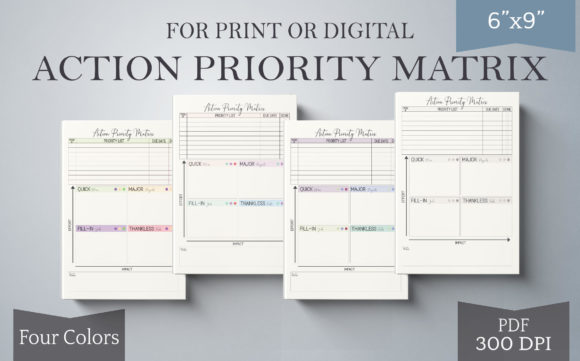
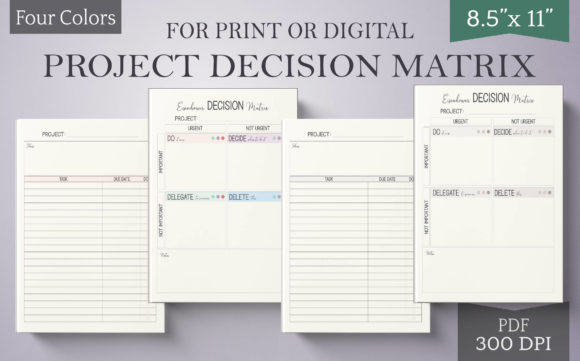
At its core, the Project Decision Planner Page - Ltr addresses a fundamental friction point in workflow management: the transition from brainstorming to prioritization. The design utilizes a two-page spread system that mirrors effective cognitive processing. The first page offers a dedicated space for comprehensive task listing, functioning as a "brain dump" mechanism. Psychological research suggests that externalizing tasks reduces cognitive load, freeing up mental bandwidth for higher-order thinking. However, a list alone is insufficient for execution.
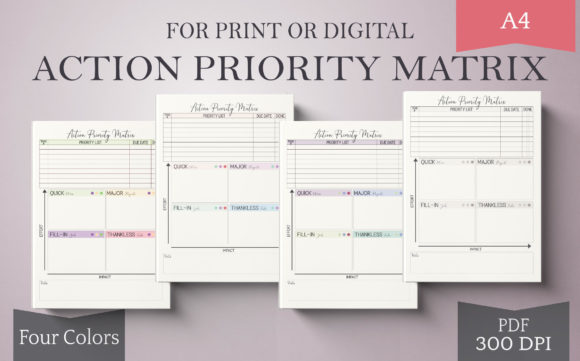
The second page introduces the Eisenhower Decision Matrix, a time-tested framework that sorts tasks into four distinct quadrants based on urgency and importance. In a business environment characterized by constant connectivity, distinguishing between what is merely loud and what is truly vital is essential. This matrix forces a deliberate pause, requiring users to categorize rather than react. For professionals managing multiple clients or creative projects, this structure transforms an amorphous to-do list into an actionable roadmap. The inclusion of four color themes further enhances this utility, allowing users to leverage color coding as a visual heuristic for different projects, energy levels, or priority tiers. This adaptability acknowledges that productivity is personal; a system that works for a software developer may need visual tweaking to work for a graphic designer.
Aligning with the Low-Content Publishing Boom
Beyond individual productivity, this template is engineered for the burgeoning ecosystem of Amazon Kindle Direct Publishing (KDP) and Print on Demand businesses. The low-content and medium-content book market has matured significantly. Early entrants could succeed with generic lined notebooks, but today’s consumers and niche audiences demand specificity and value. The Project Decision Planner Page - Ltr meets this evolving expectation by providing a functional interior that solves a specific problem.
For KDP publishers and POD entrepreneurs, this asset offers immediate scalability. Delivered as four high-resolution PDF files at 300 DPI in US Letter size, it removes the technical barriers to entry for creating professional-grade planners. The grayscale option is particularly strategic for this audience. While color printing on platforms like Amazon KDP can be cost-prohibitive for low-margin paperback books, a well-designed grayscale interior maintains aesthetic appeal while maximizing royalty potential. This allows creators to offer a premium-feeling product at a competitive price point, aligning with consumer expectations for affordable yet sophisticated organizational tools.
Furthermore, the modular nature of these pages supports the "mix and match" strategy that defines successful modern publishing. Creators are no longer bound to single-format books. These pages can be duplicated, combined with journaling prompts, habit trackers, or financial logs, and wrapped in a unique cover to create a proprietary product. This flexibility is crucial in a saturated market where differentiation is key. By using this decision matrix as a foundational element, publishers can rapidly prototype and test new niches—from student planners to executive leadership workbooks—without reinventing the wheel for every release.
The Hybrid Digital-Analog Workflow
The relevance of the Project Decision Planner Page - Ltr extends beyond physical printing. We are witnessing a definitive shift toward hybrid workflows where digital and analog tools coexist rather than compete. Digital planners for tablets have seen explosive growth, driven by professionals who want the tactile satisfaction of handwriting with the portability of a device. These PDF interiors are optimized for this use case, serving as ready-made imports for popular note-taking applications.
This dual-purpose functionality reflects a broader change in consumer preferences. Users no longer view themselves as exclusively "digital" or "paper" people; they are context-dependent. They might use a digital version for travel and quick capture, but prefer a printed US Letter version for deep work sessions at their desk. By offering a product that satisfies both modalities, creators tap into a wider total addressable market. The 300 DPI resolution ensures that whether the page is viewed on a retina display or printed on standard office paper, the lines remain crisp and the text legible. This attention to technical quality signals professionalism, a non-negotiable trait in the current digital goods marketplace.
Meeting the Needs of the Modern Solopreneur
The target audience for this planner—freelancers, marketers, and enthusiasts—operates in an environment of high autonomy and high ambiguity. Unlike corporate employees with established project management offices, solopreneurs must act as their own COOs. This creates a specific pain point: the need for enterprise-level organization without enterprise-level complexity or cost.
Traditional project management software can often feel like overkill for individual creators, introducing administrative overhead that stifles creativity. Conversely, blank notebooks lack the scaffolding needed to manage complex deliverables. The Project Decision Planner Page - Ltr occupies the sweet spot between these extremes. It provides just enough structure to enforce discipline without dictating a rigid methodology. This "lightweight structure" trend is evident across the productivity sector, as professionals seek tools that adapt to their fluid workflows rather than forcing them into predetermined boxes.
Moreover, the aesthetic component cannot be overlooked. In the creator economy, tools are also identity markers. The availability of four distinct color themes allows users to align their planning tools with their personal brand or emotional state. This might seem superficial to some, but in practice, emotional resonance with a tool increases adherence. If a planner feels inviting and aligned with one's aesthetic preferences, it is more likely to be used consistently. For sellers, this variety also enables A/B testing of cover and interior combinations to determine which visual styles resonate most with specific sub-niches.
Strategic Implementation for Creators and Users
For those looking to integrate this resource into their business or personal life, understanding its versatility is paramount. It is not simply a static template; it is a building block. Publishers should consider how this decision matrix complements other content. For example, pairing it with educational content on time management creates a "workbook" format that commands a higher perceived value than a standalone planner. Adding it to eBooks as a bonus downloadable resource can increase lead magnet conversion rates. For printables sellers, bundling these pages with complementary stickers or digital overlays creates a cohesive ecosystem that encourages repeat purchases.
From a user perspective, the true value lies in consistent application. The Eisenhower Matrix is most effective when reviewed daily or weekly. By utilizing the US Letter format, users gain ample real estate for detailed task breakdowns, making it suitable for complex projects that smaller formats cannot accommodate. Whether used to plan a marketing campaign, organize a home renovation, or structure a novel, the underlying principle remains the same: clarity precedes competence.
Future-Proofing Productivity Assets
As we look forward, the intersection of personal productivity and digital commerce will continue to deepen. Tools like the Project Decision Planner Page - Ltr represent a sustainable model for this future. They are evergreen in their utility—prioritization will always be relevant—yet flexible enough to evolve with changing platforms and printing technologies. For the creator, they offer a scalable asset base that reduces production time and increases output quality. For the user, they offer a sanctuary of order in a chaotic world.
Ultimately, the success of such tools depends on their ability to facilitate genuine outcomes. In a marketplace crowded with novelty, functionality wins. By grounding its design in proven decision-making frameworks and optimizing it for both commercial and personal utility, this planner page stands out as a practical solution for contemporary challenges. It empowers publishers to build viable businesses and empowers professionals to build viable projects, proving that even in a high-tech age, the right page layout can still make a profound difference.