Evaluating KDP Interiors: Cornell Notes for Low-Content Publishing
The low-content and medium-content publishing market on Amazon has matured significantly, shifting away from generic lined journals toward specialized, functional tools. Among these, the Cornell Notes system remains a staple for students, professionals, and lifelong learners. For publishers looking to enter or expand within this niche, KDP Interiors - Cornell Notes offers a pre-formatted solution designed to streamline the production process. This resource provides print-ready PDF files specifically configured for Amazon’s printing specifications, addressing one of the most common friction points in self-publishing: technical formatting.
Rather than spending hours designing grids, calculating margins, and testing bleed settings, publishers can utilize this interior to focus on cover design, keyword research, and marketing. However, utilizing a pre-made interior requires an understanding of its specific parameters to ensure the final product meets customer expectations. This evaluation examines the practical utility, technical specifications, and strategic application of this Cornell Notes interior for serious KDP creators.
Technical Specifications and Print Readiness
The primary value proposition of any KDP interior is technical accuracy. A beautifully designed notebook that fails Amazon’s automated review process is useless. KDP Interiors - Cornell Notes is engineered with specific constraints that align with current KDP standards for black-and-white standard color printing.
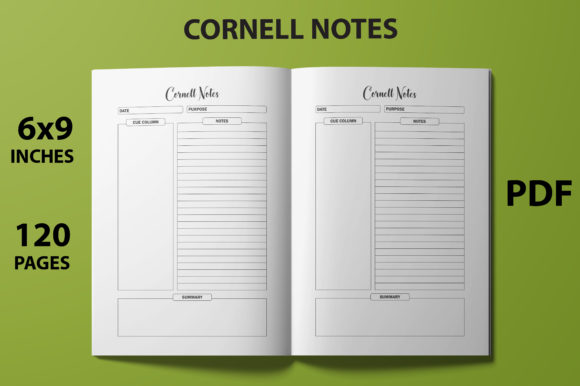
- Trim Size: The interior is formatted at 6x9 inches. This is arguably the most versatile size for note-taking books. It is large enough to accommodate the three distinct sections of the Cornell method (cue column, notes area, and summary section) without feeling cramped, yet compact enough to fit in standard backpacks, briefcases, and laptop bags. Larger sizes like 8.5x11 are often preferred for textbooks, but 6x9 dominates the portable journal category.
- Bleed Configuration: These files are set to "No Bleed." This is a critical distinction. In a no-bleed configuration, all content must remain within a safe margin zone to prevent text or lines from being trimmed during the binding process. The provided PDFs respect these safety zones, ensuring that the header, footer, and grid lines appear consistently centered on every page.
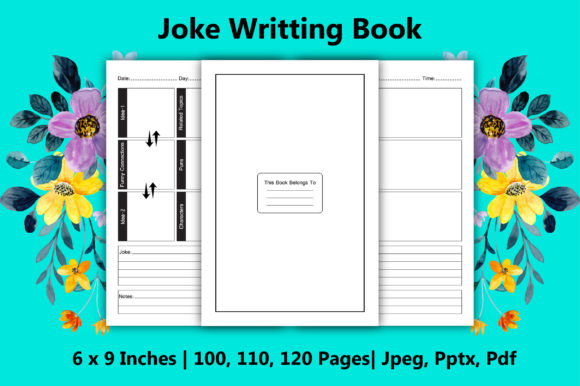
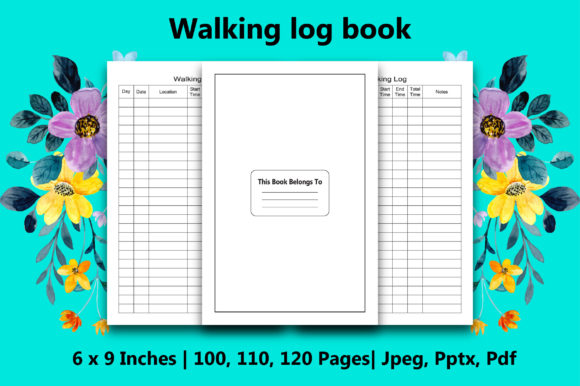
- Page Count Variations: The package includes options for 100, 110, and 120 pages. This flexibility allows publishers to test different price points and spine widths. A 100-page book may be positioned as a lightweight semester companion, while a 120-page version might serve as a comprehensive professional logbook. Having multiple page counts also facilitates the creation of series or bundles.
- File Formats: Deliverables include high-resolution PDF files ready for direct upload, along with JPG files. While the PDF is the production file, the JPGs are invaluable for creating mockups, A+ Content, and social media marketing assets without needing to render the PDF manually.
Functional Design and User Experience
A Cornell Notes journal is not merely a lined notebook; it is a productivity tool based on a specific pedagogical framework. Users purchasing this type of interior expect adherence to the traditional layout. KDP Interiors - Cornell Notes maintains the structural integrity required for the system to function effectively.
The layout typically features a vertical line separating the left-hand cue column (usually 2.5 inches wide) from the main notes area on the right, with a horizontal line reserving the bottom two inches for summaries. Consistency in these dimensions across all 100+ pages is vital. If the margins shift or the lines vary in weight, the user experience degrades, leading to negative reviews. This interior provides uniform alignment, ensuring that when a user flips through the book, the writing space is predictable and reliable.
From a usability standpoint, the line weight and spacing are optimized for standard writing instruments. Lines that are too dark can be distracting, while lines that are too faint may not reproduce well in print. This interior strikes a balance suitable for ballpoint pens, pencils, and fine liners, which constitute the majority of use cases for this demographic. Publishers should note that because this is a black-and-white interior, it is best marketed for handwriting rather than artistic journaling, which typically requires blank or dot-grid formats on white paper.
Strategic Advantages for Publishers
For entrepreneurs, freelancers, and small business owners operating in the KDP space, time is a finite resource. Creating a custom Cornell Notes template from scratch involves more than just drawing lines. It requires understanding gutter margins (which change based on page count), setting up master pages, and exporting with correct color profiles. KDP Interiors - Cornell Notes eliminates this technical overhead.
This efficiency allows publishers to redirect energy toward differentiation. Since the interior is standardized, success depends entirely on external factors: cover design, title optimization, and audience targeting. By using a reliable pre-made interior, you reduce the variable of "interior quality" from your risk profile. You know the inside works; your creative efforts can be fully invested in making the outside compelling.
Furthermore, the inclusion of JPG files supports modern KDP marketing requirements. Amazon increasingly favors listings with rich visual content. Being able to instantly generate realistic interior previews for your listing helps bridge the gap between digital browsing and physical purchase. Customers want to see exactly what the Cornell layout looks like before buying; having high-res images readily available facilitates this transparency.
Audience Fit and Market Application
Understanding who actually uses Cornell Notes is essential for positioning this product correctly. While often associated with university students, the addressable market for KDP Interiors - Cornell Notes extends significantly beyond academia.
Students and Educators
This remains the core demographic. College students, law students, and medical students use this system for lecture retention. Educators also use these notebooks for lesson planning and professional development workshops. Marketing to this group requires seasonal timing (back-to-school periods) and keywords related to study skills and academic success.
Professionals and Corporate Learners
Corporate trainers, project managers, and consultants frequently utilize Cornell Notes for meeting minutes and certification courses. Unlike student notebooks, products targeting professionals benefit from minimalist, sophisticated cover designs. The 6x9 size is particularly relevant here, as it aligns with business accessories. Positioning this interior as a "Meeting Notebook" or "Professional Development Journal" opens a higher-price-point niche.
Self-Directed Learners and Hobbyists
Adults engaged in online courses, language learning, or skill acquisition often seek structured note-taking methods. This demographic values organization and self-improvement. They are less price-sensitive than students and often look for specific features like durable covers or premium layouts. Even though this interior is standard, pairing it with a high-value cover concept can attract serious hobbyists.
Limitations and Practical Considerations
While KDP Interiors - Cornell Notes offers significant advantages, publishers must approach it with realistic expectations. It is a foundational asset, not a complete business solution.
Cover Creation is Mandatory: This product is strictly an interior. You cannot upload it as-is. You must create a separate cover file that matches the exact page count and trim size of the interior you select. A mismatch between a 110-page interior and a 120-page cover template will result in rejection. Publishers need access to cover design tools or services to complete the book.
Lack of Customization: As a pre-made file, you cannot alter the internal layout. If you wish to add a title page, table of contents, index pages, or instructional guides on how to use the Cornell system, you cannot do so with this specific file. It is a pure, repetitive interior. Publishers wanting to add front or back matter must either source a customizable template or accept the limitation of a basic layout.
Market Saturation: Because pre-made interiors lower the barrier to entry, the Cornell Notes niche is competitive. Simply uploading this interior with a generic cover is unlikely to generate sales. Success requires treating this interior as a component of a broader brand strategy. Unique selling propositions must come from your metadata, cover art, and external marketing efforts.
Final Assessment of Value
KDP Interiors - Cornell Notes serves as a competent, technically sound foundation for publishers in the educational and productivity niches. Its adherence to 6x9 no-bleed specifications, availability in multiple page counts, and inclusion of marketing assets make it a practical choice for those who prioritize speed and reliability over internal customization.
For experienced publishers, it acts as a reliable baseline for testing new cover concepts or expanding into adjacent sub-niches. For newer publishers, it removes the intimidation factor of technical formatting, allowing them to learn the platform with a lower risk of file rejection. Ultimately, the value of this interior lies not in the PDF itself, but in the operational efficiency it provides. It solves the formatting problem so that creators can focus on the actual business of publishing: connecting useful tools with the people who need them.