Evaluating My Daily Productive Plan KDP Interiors for Low-Content Publishing
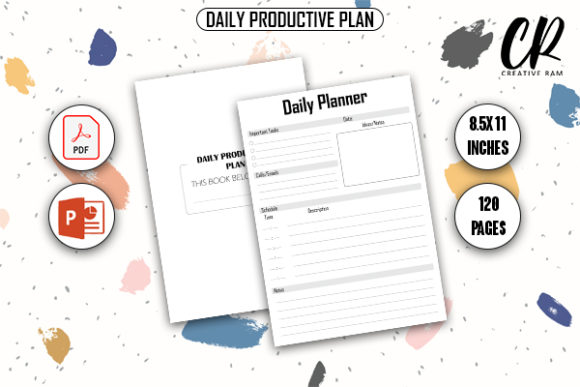
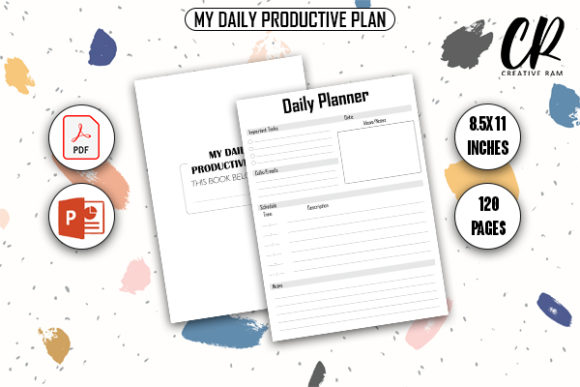
Selecting the right interior template is often the most critical decision in low-content publishing. For creators targeting the productivity niche, My Daily Productive Plan - KDP Interiors presents a specific set of specifications designed to balance user utility with platform compliance. This resource provides a pre-formatted 120-page layout at 8.5″ x 11″ dimensions, complete with bleed settings and editable source files. However, determining whether this specific asset aligns with your publishing strategy requires looking beyond the feature list to understand how it performs against market standards, alternative creation methods, and current reader expectations.
This analysis explores the practical application of these interiors, comparing them to generic alternatives and custom design approaches. The goal is to help publishers aged 20–50 assess whether this ready-to-upload solution offers a viable foundation for a sustainable catalog or if a different approach better serves their long-term business objectives.
Technical Specifications and Platform Compliance
The primary value proposition of any KDP interior is technical accuracy. Amazon’s printing guidelines are strict, and formatting errors are the leading cause of rejection or poor customer reviews. My Daily Productive Plan - KDP Interiors addresses this by providing files specifically configured for the 8.5″ x 11″ trim size with bleed. The inclusion of bleed is a significant distinction; many basic planners fail to account for the extra 0.125 inches required on the outer edges, resulting in content being trimmed off or white borders appearing where color should extend to the edge.
The package includes both high-quality print-ready PDFs and PPTX source files. From a production standpoint, this dual-format delivery serves two distinct purposes:
- Print-Ready PDF: Ensures that fonts are embedded and dimensions are locked. This file is intended for immediate upload without modification, reducing the risk of accidental formatting shifts during export.
- PPTX Source File: Allows for customization of headers, logos, or introductory pages. PowerPoint is often more accessible to non-designers than Adobe InDesign, lowering the barrier to entry for branding.
When comparing this to free resources found on public repositories, the paid specification typically guarantees that margins and safe zones have been tested. Free templates often require significant rework to meet KDP’s bleed requirements, which can negate the time saved by not designing from scratch. Conversely, professional InDesign templates offer superior typographic control but come with a steeper learning curve and higher software costs.
Content Structure and User Utility
A planner’s success depends entirely on its usability. A 120-page count is a strategic choice for daily planning. Mathematically, this allows for approximately four months of daily entries (assuming one page per day) or a full year if using a two-day-per-page spread. This differs from standard 90-day quarterly planners or massive 365-page annual journals.
For the end-user, 120 pages creates a volume that feels substantial without being intimidatingly heavy. It fits well within standard shipping tiers and keeps printing costs moderate, allowing for competitive pricing. When evaluating My Daily Productive Plan - KDP Interiors, consider how this page count aligns with your target audience’s habits:
- Habit Formation Focus: Four months is widely considered an optimal timeframe for establishing new routines before reassessing. This length supports "sprint" style productivity rather than perpetual tracking.
- Portability vs. Desk Use: At 8.5″ x 11″, this is a desk-sized planner. Users seeking pocket-sized or A5 travel journals will find this format unsuitable, regardless of interior quality.
- Writing Space: Single-page daily layouts provide ample room for detailed task lists and reflections compared to weekly spreads, though they consume pages faster.
Publishers must weigh this structure against niche demands. If your research indicates your audience prefers weekly overviews or undated bullet journal styles, a rigid daily plan may result in lower conversion rates despite high production quality.
Customization Capabilities and Brand Differentiation
The low-content market is saturated with identical interiors. The ability to customize is what transforms a commodity into a brand asset. The inclusion of PPTX files with My Daily Productive Plan - KDP Interiors facilitates differentiation, but with limitations. PowerPoint is excellent for adding title pages, changing color schemes, and inserting proprietary branding elements. It is less effective for restructuring the core grid system or altering complex vector graphics.
Compare this to hiring a freelance designer or purchasing exclusive rights to a template. Custom design ensures uniqueness but increases upfront investment and timeline. Editable templates like this one occupy a middle ground: they allow for surface-level branding and minor structural tweaks while relying on a proven base layout. This is often the most efficient path for publishers managing multiple SKUs who need consistency across a series without reinventing the wheel for each release.
However, reliance on editable templates carries a risk of similarity. If hundreds of sellers use the same PPTX file with only superficial changes, customers may recognize the pattern. Successful publishers mitigate this by significantly altering the introduction sections, adding unique value-add content (such as instructional guides or motivational essays), and creating distinctive covers that do not visually signal a generic interior.
Comparative Analysis: Ready-Made vs. Alternatives
Deciding whether to utilize this specific interior package requires understanding where it sits in the broader ecosystem of creation options. Below is a practical comparison of common approaches for productivity planners.
Ready-Made KDP Interiors (e.g., My Daily Productive Plan)
- Best For: Publishers validating a new niche, scaling a catalog quickly, or those lacking advanced design skills.
- Tradeoffs: Lower uniqueness; potential for market saturation; limited structural flexibility.
- Cost Efficiency: High. One-time purchase amortized over unlimited prints.
- Time to Market: Days rather than weeks.
DIY Design (Canva/Affinity/InDesign)
- Best For: Creating proprietary assets, highly specialized niches, and building long-term IP value.
- Tradeoffs: Significant time investment; requires learning curve; higher risk of technical errors if inexperienced.
- Cost Efficiency: Variable. Software subscriptions add up, but no per-template fees.
- Time to Market: Weeks to months depending on complexity.
Freelance Design Services
- Best For: Premium brands, complex layouts requiring expert typography, and exclusive rights.
- Tradeoffs: Highest upfront cost; communication overhead; dependency on third-party timelines.
- Cost Efficiency: Low initially, high long-term if the product sells consistently.
- Time to Market: Variable based on revision cycles.
My Daily Productive Plan - KDP Interiors is most competitive when speed and technical safety are prioritized over absolute exclusivity. It serves as a robust baseline for publishers who understand that the cover and marketing angle often matter more than minor interior variations in the productivity category.
Decision Factors and Best-Fit Scenarios
Evaluating this resource is not about finding the "best" planner interior universally, but determining if it fits your specific operational context. Several factors should influence your decision.
Licensing and Commercial Rights: Always verify the specific license terms associated with the download. Most KDP interior packages allow for unlimited commercial use in printed books but prohibit reselling the digital files themselves or using them in competing digital products. Understanding these boundaries prevents future legal complications.
Niche Alignment: The term "productive plan" is broad. Does the interior include sections relevant to your specific sub-niche? A general productivity planner may lack the specific tracking fields needed for ADHD management, academic study, or fitness coaching. If the 120-page layout is too generic for your audience, the time saved on formatting may be lost in poor market fit. In such cases, using the PPTX file to add niche-specific intro pages or worksheets can bridge the gap.
Series Potential: Consider whether this interior supports a series strategy. The 120-page, 8.5x11 format is standardized enough to be reused across multiple titles (e.g., "Productive Plan for Teachers," "Productive Plan for Entrepreneurs"). If you plan to build a brand around this specific size and structure, the initial investment yields compounding returns. If you intend to experiment with various sizes and layouts, a more flexible subscription service or DIY approach might offer better long-term value.
Limitations to Consider
No pre-made solution is without drawbacks. Publishers should be aware that editable PPTX files may sometimes experience font substitution issues if the original fonts are not installed on your system. While the PDF is print-ready, any modifications made in PowerPoint require careful re-exporting and proofing to ensure margins remain intact. Additionally, because this is a non-exclusive asset, you cannot trademark the interior layout itself. Your intellectual property protection extends only to your unique cover design, title, and any original content you add.
Furthermore, the 8.5″ x 11″ size with bleed increases printing costs compared to smaller trim sizes. Before listing, calculate your royalty margins at your intended price point. Ensure that the perceived value of a 120-page daily planner justifies the price necessary to maintain healthy margins, especially given that some competitors may use thinner paper or smaller sizes to undercut pricing.
Making an Informed Selection
My Daily Productive Plan - KDP Interiors represents a pragmatic solution for publishers seeking technical reliability and editable flexibility in the productivity niche. Its strengths lie in correct bleed formatting, accessible source files, and a versatile page count suitable for habit-building journals. It compares favorably to free alternatives in terms of safety and to custom design in terms of cost-efficiency.
However, it is not a substitute for market research. The tool solves the production problem, not the positioning problem. Publishers who succeed with this asset are typically those who pair it with strong keyword research, distinctive cover design, and a clear understanding of their reader's specific productivity pain points. By viewing this interior as a foundational component rather than a complete business solution, creators can leverage its efficiency while maintaining the creative differentiation necessary to thrive in a competitive marketplace.