Evaluating Storyboard Notebook for KDP Interiors: A Practical Guide for Publishers
Selecting the right interior template is a critical step in the low-content and medium-content publishing process. For creators focusing on visual planning, animation, filmmaking, or content creation, the Storyboard Notebook for KDP Interiors represents a specialized asset designed to streamline production. This resource is not merely a collection of blank pages; it is a pre-formatted structural tool intended to meet specific technical requirements for Amazon KDP while serving a distinct user need. Understanding the specifications, utility, and strategic fit of this 182-page black and white interior is essential for publishers aiming to produce high-quality, functional notebooks without investing excessive time in manual layout design.
Defining the Asset and Technical Specifications
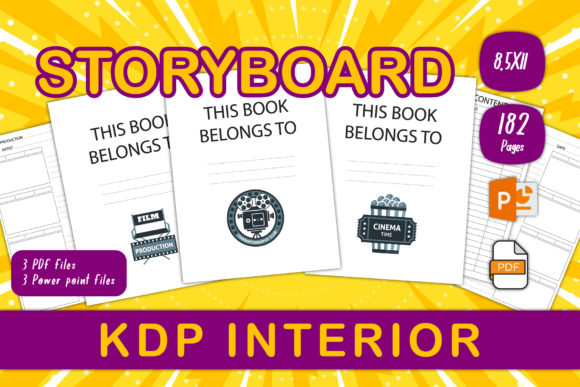
The Storyboard Notebook for KDP Interiors is a digital product package tailored specifically for print-on-demand publishing. It provides the internal structure of the book, requiring the publisher to source or create an external cover separately. The technical parameters are precise and optimized for standard industry printing:
- Trim Size: 8.5 x 11 inches, offering ample surface area for sketching and notation.
- Page Count: 182 pages, providing substantial capacity for long-term projects.
- Ink Type: Black and White standard ink, ensuring cost-effective printing and higher royalty margins.
- Bleed Settings: No Bleed, which simplifies the upload process and reduces formatting errors related to margin safety zones.
- File Formats: Includes 3 PDF files for direct upload and 3 PowerPoint files for customization.
- Title Page: Features a coordinating inside cover title page to enhance perceived value and professionalism.
This specification set indicates a product designed for efficiency. The inclusion of both PDF and PowerPoint formats suggests flexibility; publishers can use the ready-to-print PDFs for immediate listing or utilize the PowerPoint files to modify headers, add branding, or adjust frame layouts before finalizing the interior.
Primary Use Cases and Target Audience Alignment
Evaluation of this interior should begin with audience alignment. A storyboard notebook serves a functional purpose distinct from standard journals or sketchbooks. It is structured to facilitate visual storytelling and sequential planning. Publishers should consider this interior if their target demographic includes:
- Filmmakers and Videographers: Professionals and students who need to map out shots, camera angles, and scene transitions before production.
- Animators and Comic Artists: Creators requiring consistent frame ratios to plan motion and narrative flow.
- Content Creators: YouTubers and social media managers planning video essays or complex visual posts.
- UX/UI Designers: Professionals sketching wireframes and user journey maps where sequential logic is paramount.
- Educators and Students: Individuals in media studies or creative writing courses who benefit from visual outlining tools.
If your publishing portfolio targets general journaling, gratitude logging, or unstructured sketching, this specialized interior may be too rigid. However, for niches demanding structured visual organization, the Storyboard Notebook for KDP Interiors solves a specific pain point: the tedium of drawing consistent frames by hand or paying for expensive custom graphic design.
Benefits and Strategic Advantages
The primary advantage of utilizing a pre-made interior like this is the reduction of technical friction. Formatting a 182-page document with consistent margins, safe zones, and repeating elements requires significant time and software proficiency. By leveraging a tested template, publishers mitigate the risk of KDP rejection due to margin violations or bleed errors. The "No Bleed" specification is particularly advantageous for newer publishers, as it removes the complexity of extending artwork to the trim edge, thereby reducing waste and reprint costs during the proofing stage.
Furthermore, the inclusion of editable PowerPoint files adds long-term value. Unlike static PDFs, these files allow for derivative works. A publisher could create a "Film Director’s Storyboard" version and a separate "Comic Artist’s Layout" version using the same base asset, simply by altering the title page and perhaps the aspect ratio of the frames within the master file. This scalability supports catalog expansion without proportional increases in design labor.
The coordinating title page also addresses a common quality gap in low-content books. Many generic interiors lack a proper front matter section, making the book feel unfinished. A dedicated title page signals to the buyer that the product was designed with intention, potentially improving reviews and reducing returns.
Tradeoffs and Considerations
Despite the efficiencies, there are inherent tradeoffs to using pre-made KDP interiors. The most significant is market saturation. Because these assets are available to multiple publishers, identical interiors exist across the marketplace. To compete effectively, publishers cannot rely on the interior alone as a unique selling proposition. Differentiation must occur through cover design, keyword strategy, and niche targeting. The requirement to "create your own covers" is not just a technical note; it is a strategic imperative. The cover is the primary variable you control to distinguish your product from others using the same 182-page template.
Additionally, the fixed 8.5 x 11 inch size and no-bleed setting, while safe, limit aesthetic possibilities. High-end art books often utilize bleed for immersive layouts. If your target audience expects gallery-quality presentation, a no-bleed standard interior may perceive as utilitarian rather than premium. Publishers must align their marketing copy to emphasize utility, functionality, and workspace rather than artistic luxury.
Customization also carries a learning curve. While PowerPoint is accessible, it is not professional layout software like Adobe InDesign. Publishers modifying the source files must remain vigilant regarding margin safety. Altering frame sizes or moving elements too close to the gutter can inadvertently violate KDP’s printing constraints, negating the safety benefits of the original template.
Situational Fit: When to Choose vs. When to Pass
Determining whether the Storyboard Notebook for KDP Interiors aligns with your goals requires an honest assessment of your resources and objectives.
This interior is a strong fit if:
- You are building a catalog of functional tools for creative professionals.
- You lack advanced graphic design skills but want to publish professionally formatted books.
- You need to test a new niche quickly with minimal upfront investment.
- You plan to bundle this notebook with other relevant digital products or courses.
- Your focus is on volume and speed-to-market rather than bespoke artisanal quality.
Alternatives may be worth considering if:
- You are targeting a luxury gift market where unique, proprietary interiors are expected.
- You require color interiors or full-bleed layouts for specific visual effects.
- You have the budget and skills to hire a designer for a completely custom, trademarkable layout.
- Your niche requires non-standard trim sizes (e.g., square or landscape formats) that this 8.5 x 11 portrait template cannot accommodate.
Making the Final Decision
Ultimately, the Storyboard Notebook for KDP Interiors functions as a foundational infrastructure component rather than a complete product solution. Its value lies in its reliability, technical compliance, and editability. For publishers evaluating this asset, the decision should hinge on the balance between convenience and differentiation. If you can pair this tested interior with a compelling, unique cover and targeted metadata, it serves as an efficient vehicle for entering the visual planning niche. However, if your business model relies entirely on exclusive content or high-end aesthetics, the limitations of a shared, no-bleed template may outweigh the time-saving benefits. Evaluate your current catalog gaps, your design capabilities, and your audience's functional needs to determine if this specific 182-page format bridges the gap between your resources and your publishing goals.